Pressure Washing High Traffic Areas During Winter

Winter makes outdoor surfaces look tired fast, especially where people walk and cars turn all day. Pressure washing high traffic areas can still happen in the colder months, yet the plan has to match the season.
Planning Pressure Washing High Traffic Areas in Winter
Pressure washing high traffic areas during winter works best when the job starts with risk, not with the wand. A wet sidewalk can turn slick in minutes when shade and cold air meet, so timing and traffic control deserve a place at the top of the checklist.
Surface type matters right away. Concrete with hairline cracks, pavers with open joints, and painted stripes on asphalt each react differently to cold water and detergents. A quick look for weak spots keeps surprise flaking and surface etching out of the story.
Local rules matter, too. Runoff that looks harmless can still carry grit, oil, and detergent, which puts storm drains and nearby landscaping at risk. A simple containment plan usually turns into the difference between a smooth winter wash and a stressful one.
Why Winter Grime Sticks Around
Traffic brings more than footprints. Tires drop fine dust, oil mist, and de-icer residue in the same lanes and corners, and those spots keep collecting because vehicles follow the same path every day.
Cold weather slows drying. Moisture sits longer, and that extra time lets grime bond to the surface, especially around entry mats, curb cuts, and loading areas where water already pools.
Sun angles change in winter. Shaded walkways stay damp longer, so a thin film can build up even when the rest of the property looks fine. That is why the “busy corner” often looks worse than the quiet sidewalk a few feet away.
Salt Residue Shows up Fast
 Salt rarely stays where it lands. Footwear carries it across lobbies, down steps, and into the first few feet of every sidewalk run, leaving light streaks that look like dust until they build up.
Sand and grit add another layer. Those particles settle into the texture of concrete and pavers, then get packed down by repeated steps. A stiff broom can help, yet a winter rinse often needs a cleaner that can lift the film holding that grit in place.
Metal stains can sneak in, too. Rust marks around carts, railings, and dumpster lids often appear darker in cold weather because the surface stays damp longer. Careful product choice matters here, since the wrong chemical can make a small stain into a bigger one.
Picking the Right Day and Time
A winter wash needs a forgiving weather window. Air temperatures above freezing, a bit of sun, and light wind usually create the best mix for safe drying.
Morning jobs can be tricky in many regions. Overnight ice and long shadows keep pavement cold, so the surface may stay slippery even when the forecast looks friendly. Midday work often gives the best balance between warmth and daylight.
Water temperature can help. Warm water speeds cleaning and supports faster drying, while very cold water can leave a dull look on some surfaces. Equipment capacity, hose ratings, and worker comfort all benefit from that warmer setup.
High-Traffic Zones That Pay off First
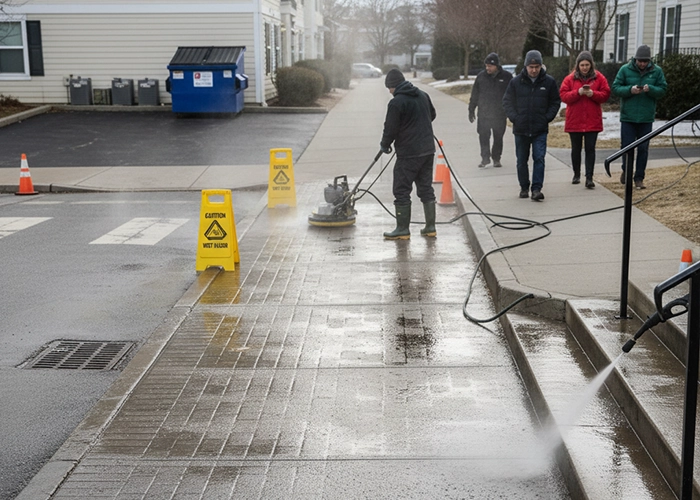 The “right” order is rarely random. Results show up fastest when the dirtiest, most visible areas get handled first, then the work moves outward.
Entrances and curb cuts deserve early attention because everyone uses them, and pressure washing high traffic areas starts paying off there first. The same goes for mail kiosks, pickup zones, and the walkway that connects parking to the main door.
A simple priority list keeps crews focused:
- Main pedestrian routes from parking to doors
- Sidewalk corners near crosswalks and curb ramps
- Dumpster pads and recycling enclosures
- Loading docks, drive lanes, and tight turn radii
- Stair treads and landings with polished wear
Detergents That Behave in the Cold
Cleaning chemistry should match the soil, not just the schedule. Winter dirt often includes oily film, salt residue, and ground-in grit, so a mild detergent designed for exterior surfaces tends to work better than harsh acids.
Dwell time becomes more important in cold weather. A gentle pre-treatment that sits long enough can reduce the need for high pressure, which lowers the chance of surface damage. Consistent rinsing also matters because leftover soap can leave a slick film.
Material compatibility should stay front and center. Painted lines, coated concrete, and decorative pavers can discolor if the wrong product sits too long. Small test spots near the edge of a work zone help avoid a big mistake in the most visible area.
Plant and pet safety belongs in the same conversation. Pre-wetting nearby landscaping, keeping chemical overspray low, and following label directions help reduce stress on shrubs and turf. Extra rinsing around planters also keeps winter soil from holding detergent where roots sit.
Water Control That Prevents Ice Problems
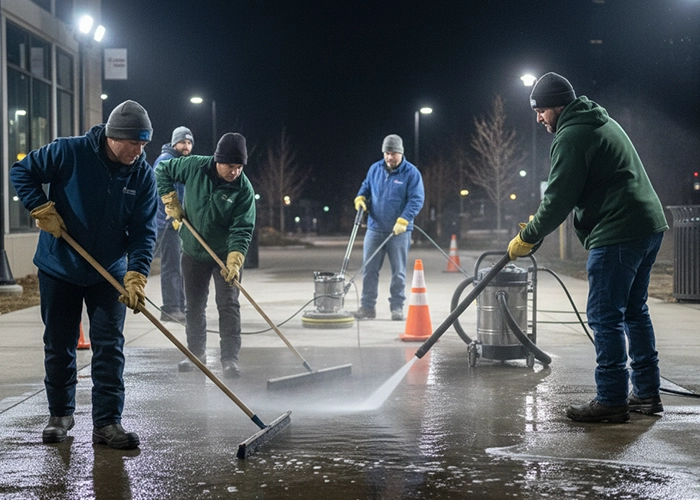 Water management is the heart of winter work. A great cleaning that leaves ice behind creates a bigger problem than the original dirt.
Runoff direction deserves planning before the first trigger pull. Berms, drain covers, wet vacs, and simple squeegee work can push water toward approved recovery points instead of letting it spread across traffic paths.
Drying speed can be improved without rushing. A surface cleaner on flat concrete reduces overspray, and a controlled rinse keeps puddles from forming. Fans and blowers can help in sheltered courtyards where air movement is limited.
Shielding Nearby Surfaces
Busy entrances include more than concrete. Glass, painted trim, and door hardware sit right next to the wash zone, and winter grime can trick people into turning the pressure up too far.
Lower pressure near edges usually wins. Wider spray tips, steady distance, and a rinse angle that pushes water away from door thresholds help protect seals and weather-stripping. That approach also reduces the chance of water getting forced into tiny gaps.
Interior protection matters for storefronts. A quick heads-up to close doors, move floor mats, and block a drafty vestibule keeps cold air and mist from drifting inside. A calm setup often saves more time than a rushed start ever will.
Equipment Habits That Avoid Freeze-Ups
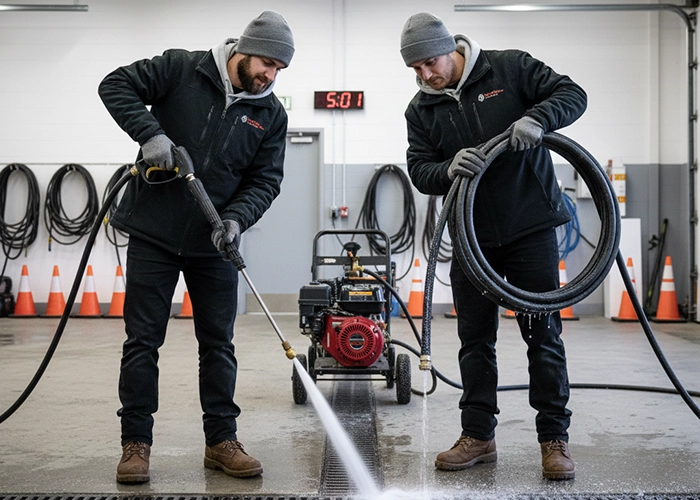 Cold weather is tough on pumps and hoses. Brittle lines, stiff couplers, and hidden water in the system can lead to downtime at the worst moment.
End-of-job routines make a difference. Hose draining, line purging, and storage in a warmer space protect parts that are expensive to replace. A pump-protectant product can help when the unit will sit between jobs.
Crew comfort plays into quality. Gloves that keep hands warm also reduce fumbling with fittings, and slip-resistant footwear lowers the chance of falls around wet zones. A stable, warm operator tends to move slower and cleaner, which is exactly what winter calls for.
Technique for Busy Pavement
Pressure washing high traffic areas is not about blasting everything at full power. Even passes, steady distance, and the right tip usually beat extra pressure, especially on older concrete.
Pre-soak and light agitation can carry the job. A soft-bristle brush around corners and gum spots keeps the wand work lighter, which protects joints and surface finish. Cleaner paths also open up with a consistent pattern, rather than a patchwork of quick passes.
Edge control matters more in winter. Overspray that lands on a colder, shaded strip can freeze sooner than the main work area. Splash guards, controlled angles, and smaller zones help keep the site predictable.
Safety Setups People Actually Notice
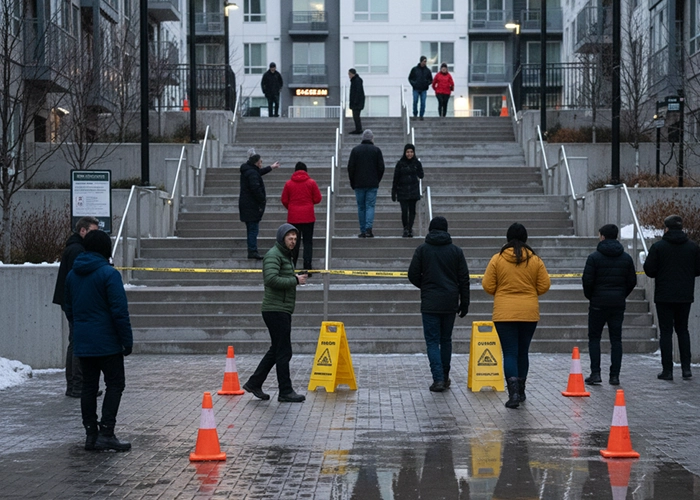 Public spaces need visible boundaries. Cones, simple signs, and a clear “closed path” route keep pedestrians from stepping into wet areas out of habit.
Slip risk should be treated as the main hazard. A wet ramp, a glossy stair tread, or a polished paver can surprise people, even on a mild winter day. Extra attention to those features reduces the chance of a scary moment in front of customers or residents.
Communication helps, too. A short heads-up to a property manager and a posted notice near entrances often reduce interruptions. Fewer interruptions usually lead to cleaner results and a faster dry-out.
Post-Wash Checks That Hold Up
A quick walk-through after rinsing prevents repeat visits. Missed corners, dirty drip lines under handrails, and “traffic shadows” near doors stand out even more once the rest of the surface looks fresh.
Drainage should be checked before leaving. Water that sits in a low spot can freeze later, even if the area looked fine during the wash. Squeegee work and a final wet vac pass can keep that from becoming a next-day complaint.
Documentation can be simple. A few photos of the finished high-traffic paths help with future scheduling and show exactly what was cleaned. That small record also helps when the next winter storm resets the surface.
Working Around Residents and Business Hours
High foot traffic often means limited work windows. Early mornings, lunch rushes, and school pickup times can turn a simple wash into a constant stop-and-start.
Coordination becomes easier with a short, shared plan. One zone can be cleaned and reopened while another gets pre-treated, which keeps access available without leaving the site half-finished.
Community sites add another layer. Pressure washing common areas near mailboxes, clubhouses, and pool gates tends to go smoother when residents know which routes will be blocked and for how long.
When a Winter Wash Should Wait
Some winter days are not worth the risk. Freezing rain, active snowfall, and heavy wind can turn water control into a losing battle.
Shaded areas can be deceptive. A walkway beside a building may stay cold all day, even when the sun is out, and that makes drying slow and ice risk high. A different day often costs less than a slip-and-fall incident.
Alternatives exist when cleaning still needs to happen. Spot cleaning with minimal water, localized rinsing, and scheduled spring deep cleans can keep appearances acceptable without pushing the site beyond safe limits.
Clean Paths, Better Winter Days
Pressure washing high traffic areas in winter is less about force and more about planning, control, and timing. The right approach keeps surfaces cleaner, keeps visitors safer, and keeps equipment from fighting the cold.
Related Articles


