Clean a Garden Statue With a Pressure Washer

Garden statues and ornaments gather dirt, algae, and stains that dull their look. You can use a pressure washer, but only when the material and condition allow it. This guide explains when it’s safe to clean a garden statue with controlled pressure and when to switch to gentler methods.
When to Clean a Garden Statue With a Pressure Washer
Many stone and concrete pieces can handle light to moderate pressure. The key is control: lower pressure, a wider spray pattern, and extra distance from the surface. Start mild and increase only if the surface stays stable and clean-up remains even.
Older statues with tight pores and minor weathering often respond well to a careful rinse. That quick pass lifts loose soil before you use a soft brush and soap. It also helps you see if the surface sheds grains or flakes, which means you should stop and try a gentler plan to clean a garden statue.
Know What Your Statue Is Made Of
 Material matters more than the tool. Concrete, granite, and many cast stones can tolerate gentle washing. Softer stones like limestone and sandstone need extra caution because water can lift grains and open the surface.
Metal statues vary. Bronze and copper develop patina over time, which you should not strip. Resin, plastic, and painted ornaments can chip or peel if pressure is too high or the nozzle is too close. Terracotta and clay absorb water and may crack or spall after pressure washing. Identify the material first, then decide how to clean a garden statue safely.
When Shouldn’t You Pressure Wash Garden Statues?
Skip pressure if you see hairline cracks, flaking, hollow sounds, or loose joints. Water under pressure can drive into voids and widen damage. Painted finishes that chalk or peel will likely lift more under a spray.
If the statue is historic, rare, or costly, avoid pressure. Hand cleaning and targeted chemistry protect value. That is the better path to clean garden ornaments without risking irreversible harm.
Do a Simple Patch Test
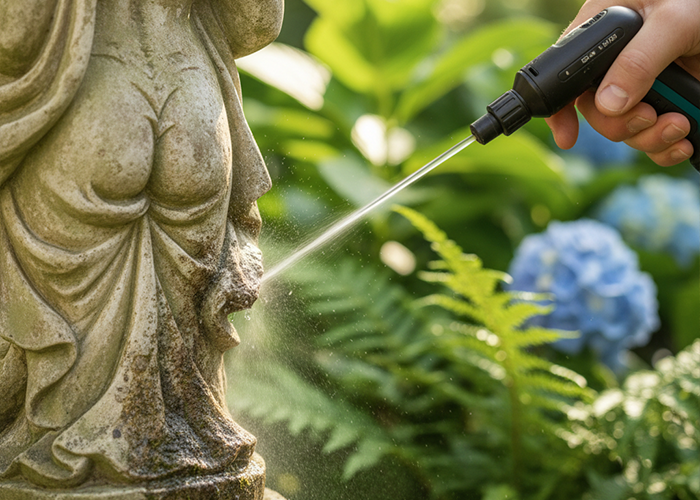 Pick a hidden spot and wet it with low pressure and a 40-degree or 25-degree fan tip. Keep the wand 18 to 24 inches away. Watch for color change, grit release, or etched lines. If the test area holds up and looks brighter without roughness, you can continue with care.
If you notice sand coming off, stop. Move to a bucket, soft brush, and a mild, pH-neutral soap. The test keeps small problems from becoming large repairs when you clean a garden statue.
Use the Right Attachments and Settings
Choose a wide fan tip, not a pinpoint. A 40-degree or 25-degree nozzle spreads force and lowers risk. Begin around 500 to 800 PSI for dense stone and concrete. Increase slowly only if you need a bit more bite. Keep the wand moving at a steady pace to prevent streaks.
Work from the bottom up to avoid drip marks, then rinse from the top down. Hold a safe distance and never chase one dirty spot with a tight stream. If you need more power at a stain, switch to brushing rather than cranking up the PSI to clean a garden statue.
Techniques by Common Materials
 Different materials have varying properties that call for specific methods of cleaning and maintaining them. Here are some to keep in mind.
- Concrete and Cast Stone: Use a wide fan tip at low pressure and pre-wet the surface. Apply a mild detergent and agitate with a soft or medium brush. Rinse with the same low pressure. Seal only if the manufacturer allows it and the statue is fully dry.
- Granite and Dense Stone: Gentle pressure with a wide fan tip works well. Keep a longer stand-off distance. Stubborn lichen may need a dwell time with a biocide rated for stone. Brush gently to protect the finish.
- Limestone and Sandstone: Avoid pressure whenever possible. These stones shed grains easily. Use a soft brush and pH-neutral cleaner. If you must rinse, do it with a garden hose, not a pressure washer.
- Bronze, Copper, and Other Metals: Do not strip patina. Skip pressure and rely on soft cloths, mild soap, and fresh water. Dry fully to prevent water spots.
- Resin, Plastic, and Painted Surfaces: Use a hose rinse and a sponge. Pressure can gouge or lift paint. Spot clean stains by hand.
- Terracotta and Clay: Avoid pressure. Water will soak in and may cause spalling or cracking as temperatures swing.
Safer Cleaners for Stains, Algae, and Mold
Plain water is gentle, but it does not always kill growth. A pH-neutral, outdoor-safe cleaner can help. Choose products labeled for stone or masonry and follow the label. For organic growth, a non-bleach, quaternary ammonium compound designed for masonry often works with a soft brush.
Always pre-wet porous stone before applying any cleaner. That reduces chemical uptake. After dwell time, rinse with low pressure or a hose. This approach lets you clean a garden statue without scarring the surface.
Handling Lichens and Moss Without Damage
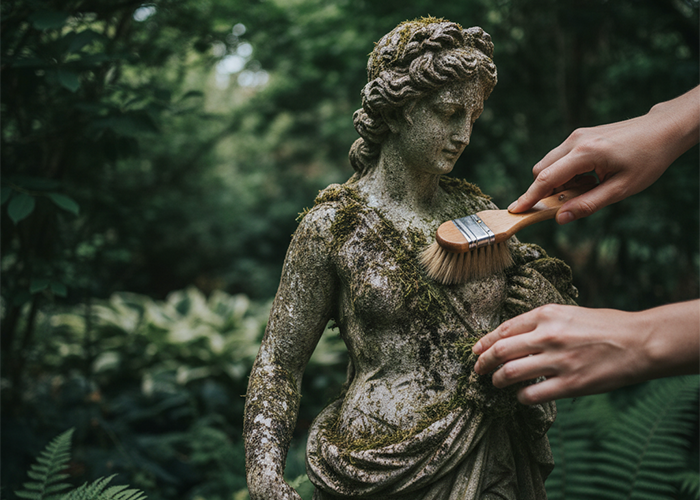 Lichens have root-like structures called rhizines that grip pores. Force alone can rip grains out of stone. Wet the area and apply a suitable biocide. Let it dwell as directed. Gently brush to release the growth, then rinse softly.
If the lichen is old and thick, plan several gentle cycles over weeks. Quick results tempt you to over-pressure, which harms the statue. A patient approach helps you clean garden ornaments while keeping edges crisp.
Removing Bird Droppings, Sap, and Rust Stains
Soak dried droppings with clean water first. Use a mild soap, and avoid harsh scrubbing that grinds grit into the surface. For sticky sap, a dilute, stone-safe resin remover can help, followed by a full rinse.
Rust stains need a product made for masonry or stone. Follow the label and test first. Do not use strong acids on limestone or marble. The wrong chemical can burn the surface and undo careful work to clean a garden statue.
Safety Steps You Should Not Skip
 Protect eyes and hands. Wear closed-toe shoes with good traction. Secure the area so that the spray does not hit windows, pets, or plants. Cover nearby foliage if you plan to use cleaners. Work on a calm day so that the mist does not drift.
Check your pressure washer’s manual. Confirm the safe PSI range and nozzle choices. A short safety review takes minutes and prevents injuries when you pressure wash garden statues.
Weather and Timing Tips
Pick a cool, overcast day. Direct sun can bake cleaners and leave marks. Early morning or late afternoon gives you a slower dry time and a more even result.
In cold climates, plan ahead. Do not soak porous stone just before a freeze. Trapped water can expand and crack surfaces. Let the statue dry fully after you clean garden ornaments, especially before the first frost.
Common Mistakes to Avoid
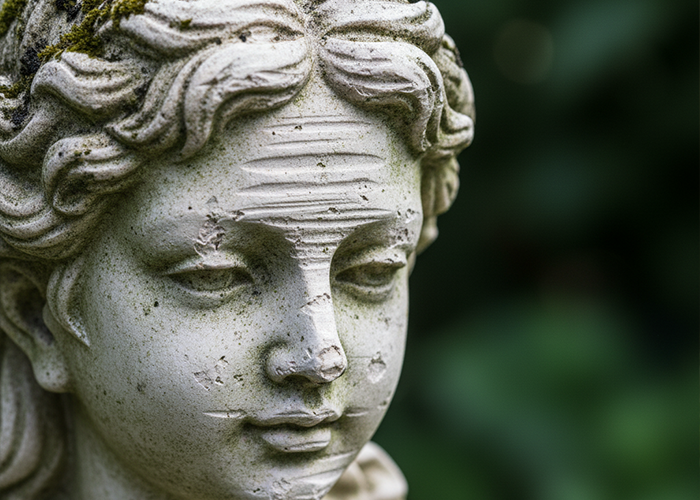 Using a turbo or zero-degree nozzle scars surfaces and leaves lines. High pressure at close range can cut edges and faces on carved details. Bleach on metals and delicate stone can discolor and degrade the surface.
Skipping a test spot is another common error. So is chasing one stain with more PSI. When the stain does not move, change the method, not the pressure, to clean a garden statue.
A Simple Step-By-Step Plan
- Identify the material. Note cracks, flaking, paint, or patina.
- Pre-wet the statue. Use a hose or light spray to reduce chemical uptake.
- Apply a mild cleaner. Choose one rated for the material and outdoor use.
- Agitate gently. Use a soft brush on textured areas and crevices.
- Rinse with care. Start low pressure with a 40-degree tip, then adjust only if needed.
- Spot treat growth. Use a stone-safe biocide for algae and lichens.
- Final rinse and dry. Allow full dry time before sealing or moving.
When to Call a Professional
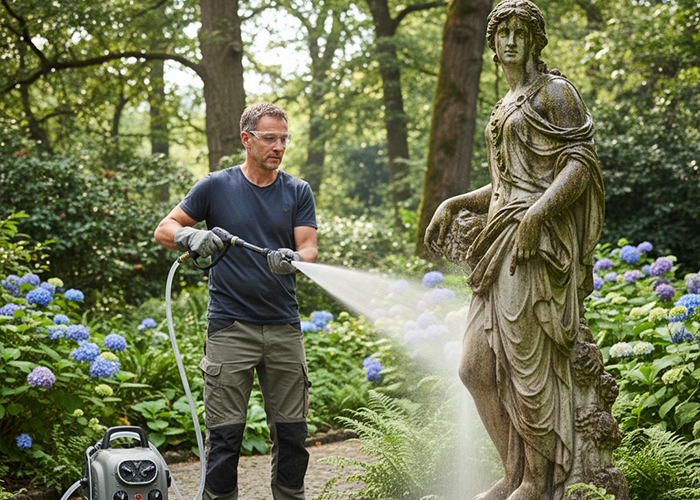 Hire a pro if the statue is valuable, fragile, or part of a memorial. Professionals can test stone, select the right chemistry, and use low-flow, controlled systems. They also carry the right nozzles, extensions, and safety gear, which saves time and reduces risk while they clean a garden statue.
If you plan regular maintenance across many pieces, a pro can set a schedule. Light rinses and annual biocide treatments often keep growth in check. That means less scrubbing and lower risk to details.
Maintenance Tips to Clean Less Often
Keep soil and mulch a few inches away from the base. Trim plants so leaves do not press against the statue. Rinse dust after pollen season. These small steps reduce buildup and keep surfaces brighter.
Consider a breathable, stone-appropriate protectant for concrete or dense stone. Always follow the label and avoid trapping moisture. The right product can slow algae growth and make it easier to clean garden ornaments in the future.
Keeping Garden Decor Clean
You can pressure wash some garden statues, but not all of them. Know the material, test first, and use gentle settings. When in doubt, switch to hand cleaning or call a pro to clean a garden statue without damage.
Looking for professional assistance with maintaining garden decor? Superb Softwash offers expert pressure washing services to residential and commercial properties. Call us today at 210.649.5655 or contact us online to receive a free estimate.
Related Articles:


