Winter Sidewalk Cleaning for Multi-Family Properties

Winter can make sidewalks look worn and feel risky, even when the rest of a property looks fine. A steady routine of winter sidewalk cleaning keeps walkways safer, helps curb appeal, and cuts down on grime that can linger until spring.
Why Winter Sidewalk Cleaning Matters
Foot traffic does not slow down just because temperatures drop, especially at apartments, condos, and townhome sites. Winter sidewalk cleaning helps residents, guests, and delivery drivers move with more confidence when daylight is short and pavement stays damp.
A clean walkway also signals that a property is being looked after. That first impression matters during tours, renewals, and routine walks with vendors. Less dark staining and less slick film can change how an entry feels.
What Winter Does to Concrete and Pavers
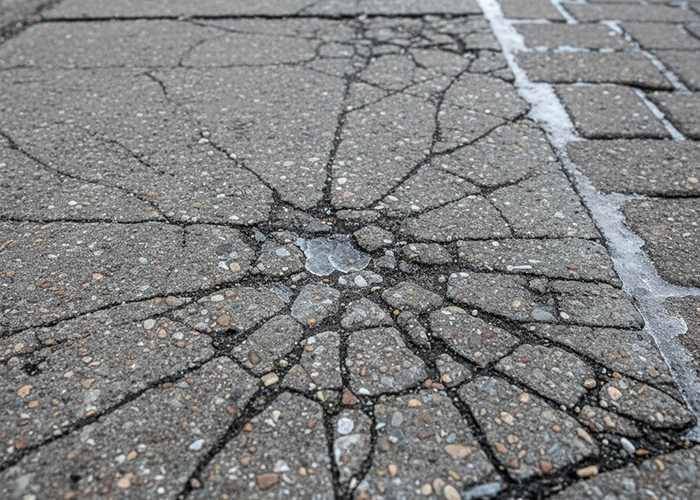 Freeze-thaw cycles put stress on concrete and pavers, even before salt enters the picture. Water slips into tiny pores, freezes, swells, melts, and then repeats. Small cracks can widen in cold snaps and trap grit that scrapes the surface.
Over time, rough spots and small chips can show up, mainly on older concrete. Some panels start to shed the thin top layer, which makes the surface look dull and feel uneven. A steady care plan helps slow that wear.
Pavers face a different set of winter issues. Joint sand can wash out, and low spots can hold water that turns into a thin ice sheet overnight. A path that felt level in October can feel off by January, mainly near downspouts and drains.
Where Winter Grime Builds up Fast
Entry areas pick up soil, leaf stains, and road grit, and it can bake into dark marks after a few sunny days. Mail rooms and trash areas add more mess, since sticky spills can end up on the walk. That mix tends to spread with every shoe and cart wheel.
Parking lots feed the problem, too. Tire spray carries oil film and fine dust farther than most people expect. That dust lands on sidewalks and sticks when damp weather hangs around.
Shade makes the job harder. North-facing walks and breezeways stay wet longer, which can lead to a slick film in many regions. Even in colder states, mild weeks can leave a thin layer that turns slippery when a freeze hits.
Slip Risks That Property Teams Often Miss
 Stairs and curb ramps usually get attention first. Quieter trouble spots can hide in plain sight, such as the flat strip right outside a lobby door where meltwater pools. Rubber mats can help, yet they also trap grit that gets dragged back out.
Drainage shifts in winter. Snow piles can block runoff, and downspouts may send water across a path when splash blocks move. Those changes can create a repeat ice strip that comes back after every melt.
Lighting matters as well. A small patch of ice or grime feels bigger when it cannot be seen. A clean surface will not replace good lighting, but it can help contrast so hazards stand out sooner.
When Pressure Washing Fits Into Winter Maintenance
Cold weather does not rule out washing, but timing matters. Pressure washing for sidewalks works best on a day with a safe temperature window, steady daylight, and a plan to keep runoff from freezing again. Drying is far easier when air temperatures stay above freezing for a few hours.
Midday often gives the best window, since surfaces have had time to warm. Hot water can lift oily film and ground-in dirt with less force, which is easier on concrete and pavers. Better results tend to come from method, not brute pressure.
In many areas, a winter wash makes the most sense between storms, not right before one. A clean surface sheds water better, and it lets deicer reach the pavement instead of sitting on a blanket of grit. Winter sidewalk cleaning in these gaps can stop a season-long buildup that takes longer to remove later.
Cold-Weather Cleaning Chemistry That Stays Practical
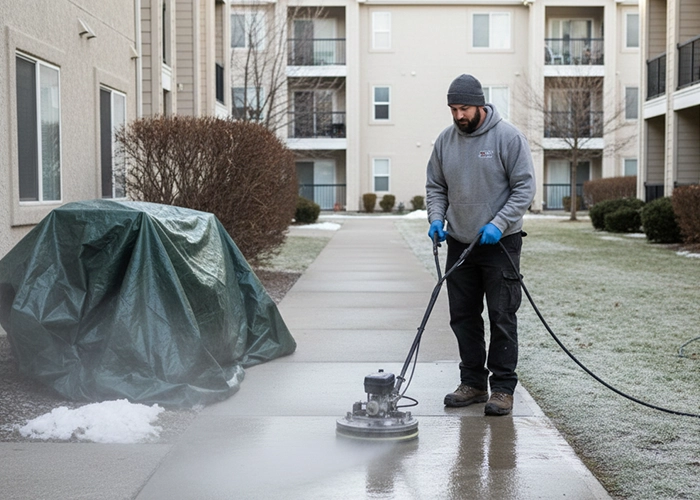 Cleaner choice matters more in winter because dwell time is often shorter. Many crews use products meant to break down grime fast, then rinse well so little is left behind. Leftover soap can catch dirt and can feel slick when temperatures dip.
A pre-soak can cut the need for high pressure. A surface cleaner paired with the right mix can lift film evenly and help avoid striped lines. Even coverage also helps the walk look the same from end to end.
Rinsing needs to be thorough in high-traffic zones. Any leftover cleaner can turn into a slip risk during a cold night. A careful rinse also helps protect nearby plants and keeps marks off close walls.
Protecting Surfaces During Cold Work
The surface itself should drive the plan. Rough-finish concrete can take a different touch than smooth finishes, and older panels may have weak spots that chip if pressure is too high. A gentler start leaves room to step up only if needed.
Nozzle distance matters more than many people think. A few extra inches can prevent etched lines and can reduce wear near control joints. On pavers, a lighter rinse helps keep joint sand in place and cuts down on refill work later.
Sealers and coatings need care as well. Some sealed walks can haze if harsh products sit too long in cool air. A small test spot in a low-traffic corner can prevent a costly surprise at a main entry.
Keeping Water From Turning Into Ice
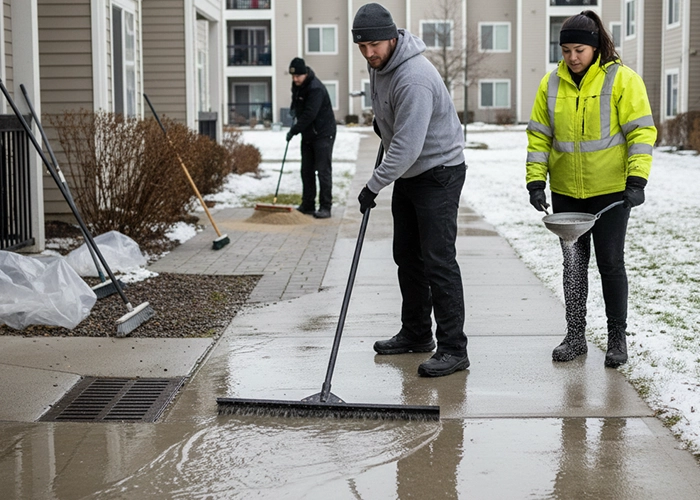 Runoff is the winter issue that never goes away. The goal is simple: get water off the walking path and away from spots where it can pool. A good plan starts before the wand turns on.
Tools can help a lot. Squeegees, push brooms, and blowers can move rinse water toward drains or safe runoff zones. At some sites, short-term berms or drain covers keep water from heading into places it should not go.
Extra grip may be needed after cleaning, based on the weather. Sand can help, yet it leaves grit to track indoors, and a small amount of deicer after the area is mostly dry can cut refreeze risk at night. A final walk-around before crews leave can catch hidden wet spots near steps and ramps.
Choosing Deicers With Sidewalks in Mind
Not all deicers treat concrete the same way. Rock salt is common and low-cost, but it can be harsh on some surfaces, and it often leaves a white film. Calcium chloride and magnesium chloride can work at lower temperatures, but they still need care.
How much product gets used matters more than the label. Too much can make a salty slush that tracks into lobbies and elevator floors. More indoor mess means more mop time and more slip risk.
Pets add another concern in many multi-family settings. A product sold as pet-friendly can still bother paws if it gets overused. Clear signs, fast cleanup, and a light hand help keep everyone happier.
A Simple Winter Sidewalk Cleaning Routine for Busy Communities
 Steady care beats one big cleanup. Many sites do well with a rhythm that matches local weather and resident traffic, rather than a rigid calendar. The plan should be easy to repeat.
A practical routine often includes a few steps. Clear roles keep it from turning into a big project:
- A quick check after each storm cycle, with notes on pooling and ice strips
- Spot cleaning at entries and mail areas before stains set in
- Regular full-path cleaning during mild weeks, mainly in shaded zones
- A follow-up sweep to remove grit that deicers and tires leave behind
Simple notes help, and before-and-after photos can show progress over the season. That record also supports budget planning, since it highlights spots that need drainage work or surface repair. Staff can also log resident reports, since those notes often point to the same corner each week.
Planning Around Storms and Resident Traffic
A good schedule respects the fact that sidewalks are a daily lifeline. Early mornings can sound efficient, but they are often the coldest part of the day. Later service windows can lower refreeze risk and can be less in the way.
Traffic patterns deserve attention. Dog-walk times, school drop-offs, and commuter exits create clear peaks. A plan that avoids those peaks can improve safety and reduce frustration.
Updates close the loop. Short notices in a resident portal or on lobby boards can set expectations about wet walks and drying time. Clear messaging also helps people pick a safer route for a few hours.
What to Expect From a Professional Winter Crew
Cold-season work takes real know-how, since winter jobs differ from a summer wash. Winter sidewalk pressure washing should include a clear plan for runoff, grip, and surface care, not just a strong machine and a fast rinse.
Insurance and training should be easy to confirm. A reliable provider will explain where water will go, how nearby doors will stay safe, and what products will be used. Proof of coverage should match the community’s needs and include limits that fit the site.
Gear choices shape results. Heated units, surface cleaners, and recovery options can cut the need for hard pressure. Better control often means a cleaner finish and less wear on edges and joints.
When a Deeper Fix Beats Another Cleaning
Some winter problems point to a bigger issue. Cracked panels, heaved pavers, and chronic pooling often need repair, not another rinse. Uneven panels can turn into trip hazards once snow hides the edge.
Drainage fixes can make sidewalk care much easier. Downspout extensions, grading tweaks, and small channel drains can stop repeat ice strips before they start. Those fixes can lower winter upkeep costs over time.
A pressure washing company can still help by flagging trouble spots. A short note after service, along with photos, can guide the next step. That teamwork keeps walks safer year after year.
Clear Walkways This Winter
Sidewalks stay in use no matter the forecast, so winter care is worth it. Winter sidewalk cleaning, paired with smart timing and runoff control, keeps multi-family properties safer and looking cared for through the cold months.
Related Articles:


