Routine Pressure Washing Benefits for Your HOA

A community can look well-run without feeling overdone, and routine pressure washing is one of the simplest ways to get there. Walkways, walls, and shared spaces collect grime faster than most boards expect, especially in busy neighborhoods. The right cleaning rhythm keeps things looking cared for while protecting surfaces that cost real money to replace.
Routine Pressure Washing Makes Common Areas Feel Cared For
Curb appeal shows up before a resident reads a newsletter or attends a meeting. Routine pressure washing gives the whole property a “freshly maintained” look in a weekend, which helps set expectations for the rest of the community. Fewer stains on concrete and fewer dark streaks on siding can change the way people talk about the board.
A predictable scope helps everyone stay on the same page, including vendors, managers, and residents. Most HOAs start with a few high-visibility areas and build from there:
- Entry monuments, perimeter walls, and signage bases
- Sidewalks, driveways, and crosswalk-style paths
- Pool decks, playground pads, and clubhouse walkways
- Dumpster enclosures and pet-run concrete lanes
Grime Has a Way of Turning Into Repairs
Dirt rarely stays on the surface. Over time, trapped moisture and organic buildup can work their way into porous materials, especially on shaded sides of buildings and along irrigation lines. Those dark patches often look cosmetic, yet they can be an early sign of algae or mildew taking hold.
Money tends to follow neglect. When grime builds up for years, boards often face tougher cleaning, higher labor time, and a greater risk of needing patchwork repairs. A steady maintenance cycle also makes bid comparisons easier, because “clean every spring” is clearer than “clean when it looks bad.”
Safety Starts at the Sidewalk
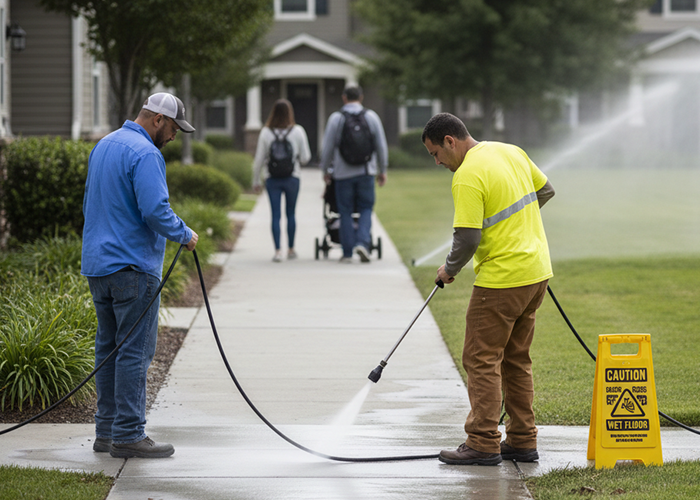 Slippery walkways create stress for everyone. Algae on shaded concrete, soap residue near car-wash areas, and slick pool decks can turn a normal day into a fall claim. Many boards already think about lighting and trip hazards; surface traction deserves the same attention.
Wet, dirty surfaces are a known slip risk, and that risk rises when residents hurry, carry packages, or walk in the rain. Routine pressure washing helps remove the film that reduces friction, especially in spots where sprinklers hit the pavement every morning. Clear warning signs during service and a proper dry-down period keep the work resident-friendly.
Surfaces Last Longer When They are Kept Clean
Exterior materials age in predictable ways. Stucco holds dust, vinyl collects mildew, and concrete keeps every oil drip and leaf stain like a scrapbook. Cleaning on a steady rhythm helps slow that “permanent” look that can show up long before the surface actually fails.
Technique matters, though. Too much pressure can scar wood, etch concrete, and strip paint from trim, which is why experienced crews adjust pressure, nozzle type, and distance based on the material. A gentler approach, paired with the right cleaning solution and rinse, often delivers better results than blasting every surface the same way.
Soft-wash methods can fit some surfaces better than high-pressure cleaning, especially for siding with stubborn mildew or chalky oxidation. The goal stays the same: remove growth and grime without forcing water into places it should not go.
A Cleaner Community Gets Fewer Complaints
 Perception drives many HOA emails. A resident might not notice fresh mulch, but a blackened sidewalk near their driveway gets attention fast. Having clean common areas lowers the temperature of day-to-day conversations, which gives managers and volunteers more room to focus on bigger projects.
Consistency helps avoid “why that building and not ours” feedback. When the community knows the cleaning cycle and the scope, the work feels fair and planned. A simple before-and-after photo set for board records also reduces confusion later.
Seasonality and Routine Pressure Washing Schedules
Local climate should shape the calendar. Spring pollen can leave a dull coating on sidewalks, while humid summers can speed up mildew growth on shaded walls. In many communities, a main cleaning in spring and a lighter touch-up before peak holiday hosting is enough.
Alignment with other seasonal work reduces disruption. Pool opening, exterior touch-up paint, and landscape refreshes already put crews on-site, so pressure washing can slot into that window. Weather buffers belong in the plan, since heavy rain can slow drying times.
In colder regions, timing may revolve around thaw and salt residue instead of humidity. A post-winter clean can lift gritty buildup from sidewalks and entrances, which helps the property look “back to normal” sooner.
Planning Feels Easier With a Repeatable Scope
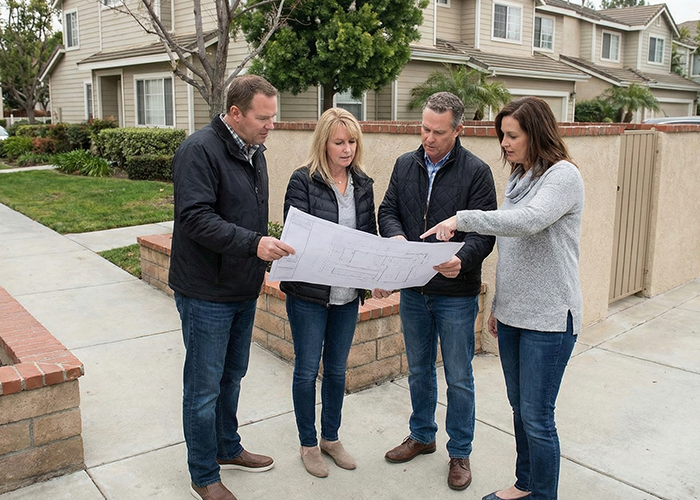 A board does not need a complicated program to get consistent results. Pressure washing plans usually start by defining what “clean” means for the property and which surfaces are included. That written scope protects everyone when leadership changes.
Budgeting becomes smoother when the work is treated like any other recurring service. Vendor bids can be requested using the same map, the same square footage estimates, and the same expectations about staining that may not fully lift. Over time, the community gets a more accurate sense of what the service should cost.
Runoff Control Protects the Community
Water has to go somewhere, and that detail can create real problems if it gets ignored. Wash water can carry dirt, algae, oil, and cleaning products toward storm drains, which is why many cities publish best practices for pressure washing. A responsible vendor will talk about containment, collection, and disposal before a hose is even uncoiled.
Simple safeguards usually handle most HOA settings. Sandbags, berms, or vacuum recovery can keep runoff out of curb inlets, and crews can avoid washing right before a forecasted storm. A plan like that keeps the work cleaner, too, because grime is not redeposited down the block.
Local water rules can matter as much as runoff control. Some areas have drought restrictions, limits on daytime use, or required permits for certain cleaning chemicals.
Routine Pressure Washing: Vendor Questions to Ask
 A vendor can look professional and still be a poor fit for HOA work. Multi-building communities need crews that can work around parking, quiet hours, and resident traffic without cutting corners. Regular pressure washing is also safer when the company carries the right insurance and documents its process.
A short list of questions keeps the selection process practical:
- Proof of general liability coverage and workers’ compensation insurance
- A clear plan for protecting landscaping, lights, and painted trim
- Guidance on soft-wash vs. higher-pressure cleaning for siding and roofs
- Runoff control steps to keep wash water out of storm drains
Contracts Keep Expectations Clear
Clarity prevents awkward mid-job surprises. A strong agreement spells out the scope, the frequency, the service hours, and what happens when weather delays a visit. Photo documentation requirements can be included as well, since “cleaned” looks different from one person to the next.
A few community-specific details belong in writing. Gate codes, water access points, on-site contact names, and parking restrictions help crews work faster and cut down on resident interruptions. Routine pressure washing becomes simpler when the same expectations follow the job each time.
Add-on work can be defined before the day starts. Gum removal, rust treatment, and graffiti cleanup often take different tools and extra time, so those items are best priced separately.
Routine Pressure Washing and Resident Communication
 Good work can still feel chaotic without preparation. Parking areas near sidewalks, curb cuts, and garages often need temporary access changes, even if the cleaning is limited to common areas. A two-part notice helps: one message a week out, and another reminder the day before.
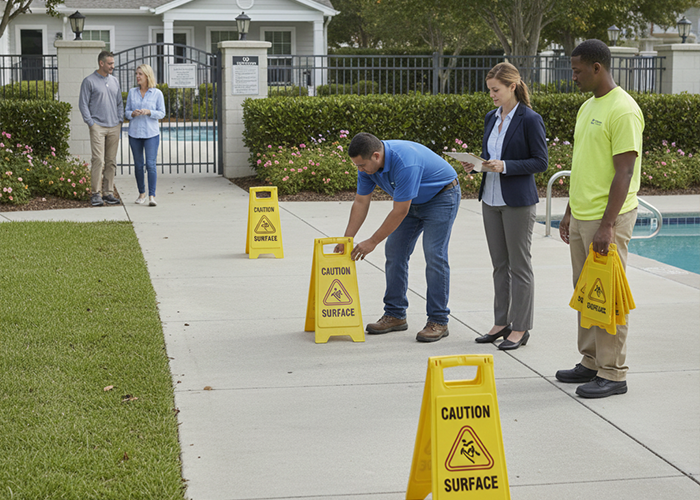
Signage matters more than people expect. “Wet surface” boards at pool entries and walkway corners reduce close calls, and they also show that the HOA planned for safety. Clear start and end times keep residents from guessing, which reduces complaints and keeps crews moving.
Small Wins Add Up After the First Cycle
Early results usually show up in photos and in resident feedback. Cleaner concrete makes landscaping pop, and bright entry signage looks newer without replacement. Those changes can help the board justify the service in a way residents understand.
A few simple metrics keep future decisions grounded. Complaint volume, slip reports, and repeat staining in irrigation-heavy zones can guide adjustments to the next service window. Routine pressure washing becomes smarter each year when the community treats it as a living maintenance plan.
Clean That Sticks
A well-timed wash keeps an HOA looking orderly, safe, and welcoming, without adding daily work for volunteers. Routine pressure washing also protects surfaces that are expensive to repair and even harder to replace. The best results come from a clear scope, a reliable vendor, and a calendar the community can count on.
Looking for professional advice on creating a routine for your community? Superb Softwash offers residential and commercial pressure washing services. Call us today at 210.649.5655 or contact us online to get a free estimate!
Related Articles:


